
Few things derail your day quite like turning the key—or pressing the start button—only to find your car won’t budge. A dead car battery is one of the most common vehicle problems drivers face, yet most people aren’t fully prepared when it happens.
According to AAA, battery-related roadside service calls exceeded 5.7 million in 2024 alone. Batteries fail for many reasons: age, extreme temperatures, leaving lights on, or simply sitting unused for too long. Whatever the cause, knowing how to respond quickly and safely makes all the difference.
This guide covers how to recognize a dead battery, what to do immediately, how to jump start your car step by step, and when it’s time to call a professional.
How to Tell If Your Car Battery Is Dead
Before you assume the worst, it helps to know what a dead or failing battery actually looks like. The signs aren’t always obvious.
Dashboard Warning Lights and Electrical Issues
Your car’s electrical system is usually the first to show signs of battery trouble. Look for the battery warning light on your dashboard—a red icon shaped like a battery. You may also notice flickering interior lights, a dim display screen, or accessories like power windows responding sluggishly.
These symptoms suggest the battery isn’t holding enough charge to power your vehicle’s systems properly.
Engine Cranking But Not Starting
A slow, labored crank is a classic sign of a weakening battery. You’ll hear the engine trying to turn over—that familiar “ruh-ruh-ruh” sound—but it can’t quite get there. This often means the battery has enough charge to attempt a start, but not enough to complete one.
Complete Silence When Turning the Key
If you turn the key and hear nothing at all, the battery may be fully drained. In some cases, you might hear a rapid clicking noise instead. That clicking typically points to a battery that’s too weak to engage the starter motor.
Immediate Steps to Take
Stay calm. A dead battery is fixable, but rushing increases the risk of mistakes—or injury.
Prioritize Safety First
If your car dies while driving, coast to a safe location away from traffic. Turn on your hazard lights. If you’re in a parking lot or driveway, leave them on to signal to others that your vehicle is disabled.
Before attempting anything, check the battery for visible damage. A cracked, swollen, or leaking battery should never be jump started. According to AAA’s senior repair manager David Bennett, “attempting to jump-start a damaged or frozen battery could cause significant damage to the vehicle and, worse, individuals around the vehicle.”
Gather the Right Equipment
You’ll need a set of jumper cables or a portable jump starter. Portable jump starters—roughly the size of a paperback book—are a smart investment. Many models tolerate temperatures up to 140°F and can be purchased for under $100. They also double as a charger for phones and tablets, making them a practical addition to any car.
Turn Off All Electrical Components
Before connecting anything, switch off your headlights, radio, air conditioning, and any other accessories. Reducing the electrical load improves your chances of a successful jump start and protects sensitive electronics.
How to Jump Start Your Car
Jump starting looks simple, but the order in which you connect the cables matters. Follow these steps carefully.
Position Both Vehicles
Park the working vehicle close enough to the dead one so the jumper cables can reach both batteries comfortably. The two vehicles should not touch each other. Turn off the ignition on both cars.
Connect the Jumper Cables in the Correct Order
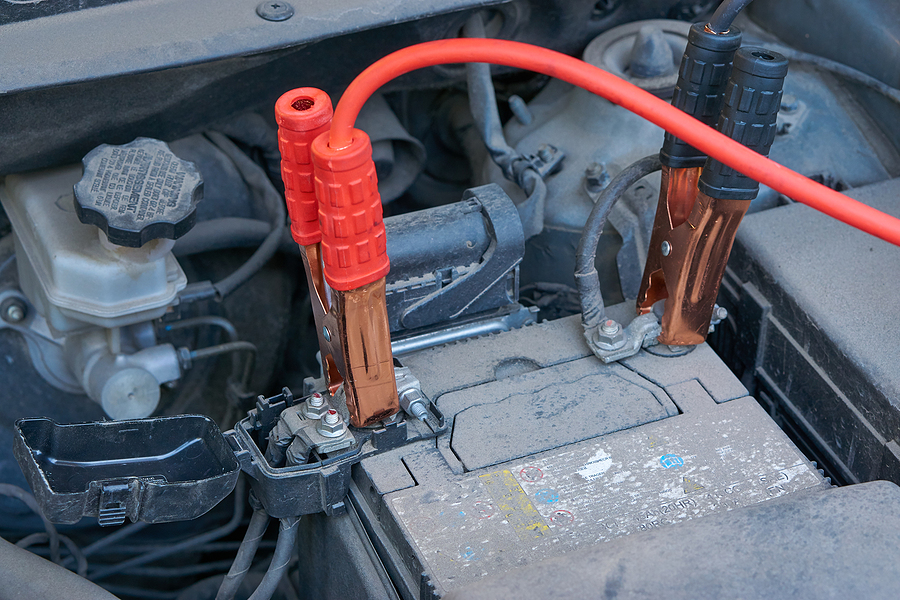
Jumper cables have two clamps: red (positive) and black (negative). Battery terminals are marked with + (positive) and − (negative). If your terminals are grimy, wipe them clean before connecting.
Follow this sequence:
- Connect the red clamp to the positive terminal on the dead battery
- Connect the other red clamp to the positive terminal on the good battery
- Connect the black clamp to the negative terminal on the good battery
- Connect the last black clamp to an unpainted metal surface on the car with the dead battery—such as the engine block—away from the battery itself
That last step is important. Connecting the final clamp to a metal ground rather than the dead battery reduces the risk of sparks near the battery.
Start Both Vehicles and Let the Battery Charge
Start the rescue vehicle first and let it run for two to three minutes. Then attempt to start the car with the dead battery. If it starts, don’t shut it off right away. Let it run for at least 20 minutes so the alternator can recharge the battery sufficiently.
Disconnect the cables in the reverse order: black ground clamp first, then black negative, then red positive on the rescue car, and finally red positive on your car.
If the car still won’t start after a proper jump attempt, there may be a deeper issue—a faulty alternator, a failing starter, or a battery that’s simply beyond saving.
When to Call a Professional
Some battery situations are best left to a trained mechanic.
Situations That Require Expert Help
- The battery is visibly cracked, bulging, or leaking
- The car starts but dies again within minutes
- You’ve replaced the battery recently and the problem persists
- Your check engine light or alternator warning light stays on after starting
These scenarios can indicate alternator failure, parasitic drain, or deeper electrical faults—none of which a jump start will fix.
What to Expect From a Professional Battery Service
A local auto repair shop will test the battery’s load capacity, inspect the terminals for corrosion, and check the alternator’s output. Many mechanics can complete this inspection in under an hour. Consumer Reports recommends having your battery load-tested annually once it’s 2 years old if you live in a warmer climate, or after 4 years in colder regions.
Preventing Dead Battery Issues
The best way to deal with a dead battery is to stop it from dying in the first place.
Maintain Your Battery Regularly
Car batteries typically last three to five years, according to AAA. Routine inspection—checking for corrosion around the terminals and ensuring connections are tight—can catch problems before they strand you. Corrosion looks like a white or blue powdery buildup around the terminals and can usually be cleaned with a mixture of baking soda and water.
Drive Your Vehicle Consistently
Batteries recharge through the alternator while the engine runs. A car that sits for days or weeks at a time will slowly drain. If you don’t drive regularly, consider using a trickle charger or battery maintainer to keep the charge stable without overcharging.
Monitor Battery Age and Health
Keep track of when your battery was installed. Most batteries have a date code printed on the label. Once a battery passes the three-year mark, annual testing becomes especially important.
Frequently Asked Questions
How long does a car battery last?
Most car batteries last between three and five years, though this varies based on climate, driving habits, and battery quality. Heat is particularly hard on batteries, accelerating chemical breakdown inside the cells.
Can extreme weather cause battery failure?
Yes. Both heat and cold affect battery performance. Summer heat degrades battery life over time, while cold weather reduces a battery’s ability to deliver power. A battery that performs fine in summer may fail on the first cold morning of winter.
Is it safe to jump start an older vehicle?
Generally yes, but with caution. Older vehicles tend to have simpler electrical systems, which makes them easier to jump start safely. That said, always check the owner’s manual first, and inspect the battery for visible damage before connecting cables.
Get Your Battery Checked by the Pros
A dead battery is more than just an inconvenience—it’s a warning sign that something isn’t right under the hood. Ignoring a failing battery doesn’t make the problem go away; it simply delays it. And when that battery finally gives out, it rarely happens at a convenient time or place. Addressing the issue early can save you from a stressful breakdown on a cold morning or in the middle of a busy day.
If you’re in the Indianapolis area and need a battery inspection, replacement, or general vehicle service, the team at Northeast Auto Service is ready to help. Don’t wait until you’re stranded. A quick battery check today can save you a stressful situation tomorrow.
Related Posts:
Car Battery Disposal: A DIY Mechanic’s Guide
Troubleshooting Common Car Battery Issues
How to Choose the Perfect Car Battery: A Step-by-Step Guide