
Your head gasket does a job most drivers never think about—until it fails. Sealing the gap between your engine block and cylinder head, it keeps coolant, oil, and combustion gases exactly where they belong. When it’s intact, your engine runs smoothly. When it’s not, you’re facing one of the most expensive repairs your car can need.
Catching the warning signs early can mean the difference between a manageable repair and a replaced engine. Below, we’ll walk through the six most common symptoms of a blown head gasket, so you know exactly what to watch for and when to act.
1. White Smoke From the Exhaust
If you notice thick, white smoke billowing from your tailpipe, your head gasket may be allowing coolant to leak into the combustion chamber. Once that coolant burns alongside fuel, it produces visible white smoke—most noticeable when your car has been idling, like at a stoplight.
How to Tell It’s Not Just Steam
Cold mornings can cause brief, thin wisps of vapor from your exhaust, which is completely normal. A blown head gasket, on the other hand, produces persistent, thick white smoke that doesn’t dissipate after a minute or two. You may also notice a sweet smell inside the cabin—a telltale sign of burning antifreeze.
2. An Overheating Engine
A chronically overheating engine is often the first sign drivers notice. When your head gasket fails, coolant can escape the cooling system, leaving your engine without enough fluid to regulate its temperature. The engine then works harder to produce power, generating even more heat.
Watch your temperature gauge closely. If it creeps toward the red zone repeatedly, especially after a repair or without an obvious external leak, a head gasket issue should be high on your list of suspects. Continued driving in this state risks warping the cylinder head within minutes, turning a standard engine repair into a much costlier one.
3. Milky or Discolored Engine Oil
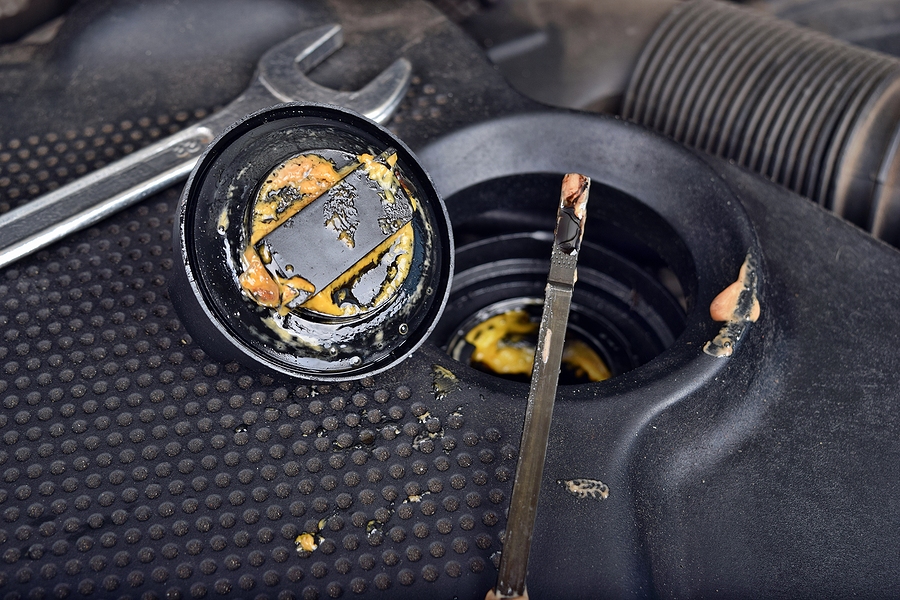
Oil and coolant should never mix. When a head gasket fails internally, that’s exactly what happens. The result is a thick, pale, frothy substance that collects under your oil filler cap or shows up on the dipstick.
Checking Your Oil the Right Way
Pop the hood and unscrew your oil filler cap. If you see a milkshake-like residue on the underside, coolant is likely contaminating your oil system. This isn’t just a cosmetic issue—coolant breaks down the lubricating properties of oil and accelerates wear on your engine bearings, so it’s worth having a licensed auto mechanic confirm the cause right away.
4. Rough Idling and Engine Misfires
A failing head gasket often causes your engine to lose compression. Without consistent compression across all cylinders, your engine may idle roughly, knock, or even stall at stops.
You might also feel misfires while driving—a hesitation or stumble during acceleration. These symptoms happen because combustion gases are escaping where they shouldn’t, disrupting the precise balance your engine needs to run smoothly.
5. Coolant Leaks With No Obvious Source
If you’re topping off your coolant more often than usual but can’t find a puddle under your car, the leak may be internal. A blown head gasket can allow coolant to seep into the cylinders or oil system, where it burns off or mixes rather than dripping onto your driveway.
External leaks are easier to catch—look for coolant pooling near the front of the engine, where the cylinder head meets the engine block. Internal leaks require a closer inspection, often involving a pressure test or a cylinder leak-down test performed by a professional.
6. Loss of Power and Performance
Compression loss doesn’t just cause rough idling—it robs your engine of power. You may notice sluggish acceleration, reduced towing capacity, or a general feeling that your car is working harder to do what it used to do with ease. Fuel consumption often climbs too, as your engine burns more fuel to compensate for lost efficiency.
Frequently Asked Questions
Can I drive with a blown head gasket?
No. Continuing to drive with a blown head gasket risks warping your cylinder head, cracking the engine block, and contaminating your oil system. Most engines sustain serious damage within 30 minutes to two hours of driving, though severe failures can cause catastrophic damage in as little as 10 to 15 minutes.
How much does head gasket repair cost?
Head gasket replacement typically costs between $1,200 and $2,500 for most vehicles, depending on engine size and labor rates. If you continue driving on a blown gasket, the resulting engine damage can push repair costs to $4,000 to $8,000, or require a full engine replacement.
How long does head gasket replacement take?
Because the job involves disassembling much of the upper engine, head gasket replacement typically takes one to several days to complete, depending on the vehicle and the extent of any additional damage found during the repair.
Get a Professional Diagnosis Before It’s Too Late
A blown head gasket rarely improves on its own, and waiting to address it almost always costs more in the long run. If you’ve noticed white smoke, overheating, milky oil, or any of the other signs above, it’s time to have your vehicle inspected.
The team at Northeast Auto Service in Indianapolis has the experience to accurately diagnose head gasket issues and get your engine back to full health. Schedule an appointment today and drive with confidence again.
Related Posts:
When Your Car Needs a New Heart: Engine Replacement Guide
The Hidden Dangers of Faulty Hoses and Gaskets in Your Car
Clear Signs Your Car Engine Is Malfunctioning