
Parking your car for an extended period isn’t as simple as turning off the ignition and walking away. When a vehicle sits idle for weeks or months, it faces hidden risks that can damage critical components and leave you with expensive repairs. Understanding proper storage maintenance protects your vehicle and ensures it’s ready to drive when you return.
TL;DR: Leaving your car unused for weeks or months can lead to dead batteries, flat-spotted tires, and internal engine corrosion. Protect your investment by using a battery tender, adding fuel stabilizer, maintaining proper tire pressure or elevating the vehicle, and sealing entry points against pests.
Key Takeaways:
- A battery tender prevents discharge during storage periods longer than two weeks
- Fuel stabilizer stops ethanol buildup and protects the fuel system for up to 12 months
- Proper tire care—either over-inflation or jack stands—prevents costly flat spots
- Sealing openings and using covers protects against rodents and weather damage
- Professional inspection after storage ensures safe return to the road
Table of Contents:
- How to Maintain Your Car Battery While Stored
- Essential Fluid Maintenance for Unused Cars
- Preventing Tire Flat Spots and Dry Rot
- Protecting the Exterior and Interior Environment
- FAQ
- Quick Recap: Your Storage Checklist
- Book Auto Service in Indianapolis
How to Maintain Your Car Battery While Stored
Use a battery tender (trickle charger) or disconnect the battery entirely to prevent complete discharge during storage. Modern vehicles draw power constantly, even when parked. Features like OnStar, security systems, and over-the-air update capabilities create what’s called “parasitic drain.” Leave your car sitting for more than two weeks, and you’ll likely return to a dead battery.
A battery tender connects to your battery and plugs into a standard outlet, delivering just enough charge to maintain battery health without overcharging. This device costs between $30 and $60 and can preserve your battery for months.
If you choose to disconnect the battery instead, remove the negative terminal first using a wrench, followed by the positive terminal. Keep the cables separated and away from the terminals. This method works for shorter storage periods but won’t prevent the battery from slowly losing charge over time.
🔌 For electric vehicles: Leave the high-voltage battery at 40-60% charge and enable storage or deep sleep mode if your vehicle offers it. You can still disconnect or use a tender on the 12-volt battery that powers accessories, but you’ll need physical key access since your key fob won’t work with the 12-volt battery disconnected.
Essential Fluid Maintenance for Unused Cars
Add fuel stabilizer to a full gas tank and change your oil before storage to prevent internal corrosion and fuel system damage. Gasoline begins breaking down within 30 days, especially fuel containing ethanol. As it degrades, moisture accumulates in your tank, leading to rust and gum deposits that can clog fuel injectors. Replacing a fuel injection system can cost $1,000 or more.
Fill your gas tank completely—a full tank minimizes the air space where condensation forms. Add a quality fuel stabilizer like Sta-bil according to package directions, then drive your car for 10-15 minutes to circulate the treated fuel through the system. Most stabilizers protect fuel for up to 12 months.
Used engine oil contains contaminants and acids that can corrode internal engine parts during extended storage. Change your oil before parking your vehicle for more than 30 days, even if you’re not due for your regular scheduled car maintenance interval. Fresh oil provides a protective coating for engine components.
Top off your brake fluid and coolant as well. Check your owner’s manual for proper fluid levels. If you’re storing your vehicle in freezing temperatures, verify that your windshield washer fluid is winter-formulated to prevent freezing and cracking the reservoir.
Preventing Tire Flat Spots and Dry Rot
Inflate tires slightly above the recommended PSI or place your vehicle on jack stands to prevent flat spots from developing during storage. Tires weren’t designed to support a stationary vehicle’s weight for months. The section of rubber in contact with the ground compresses, creating flat spots that cause vibration and can permanently damage the tire. Performance and low-profile tires develop flat spots faster than standard tires.
You have three options to protect your tires:
- Over-inflate: Add air to bring your tires to the upper end of the manufacturer’s recommended PSI range, or 5 PSI higher. This extra pressure helps the tire maintain its round shape under the vehicle’s weight. Check your owner’s manual or the sticker on the driver’s door jamb for specifications.
- Use jack stands: For storage longer than 30 days, lift all four corners of your vehicle onto rigid jack stands positioned at proper jacking points. Never use hydraulic jacks for long-term support—they’re not designed for extended weight-bearing and can fail. This method completely eliminates pressure on your tires.
- Install tire cradles: These curved platforms support the tire’s shape without fully lifting the vehicle, offering a middle-ground solution.
✅ Important: Do not engage your parking brake during storage. Brake pads can rust and fuse to the rotors when locked in place for extended periods. Instead, use wheel chocks or tire stops to prevent rolling.
Protecting the Exterior and Interior Environment
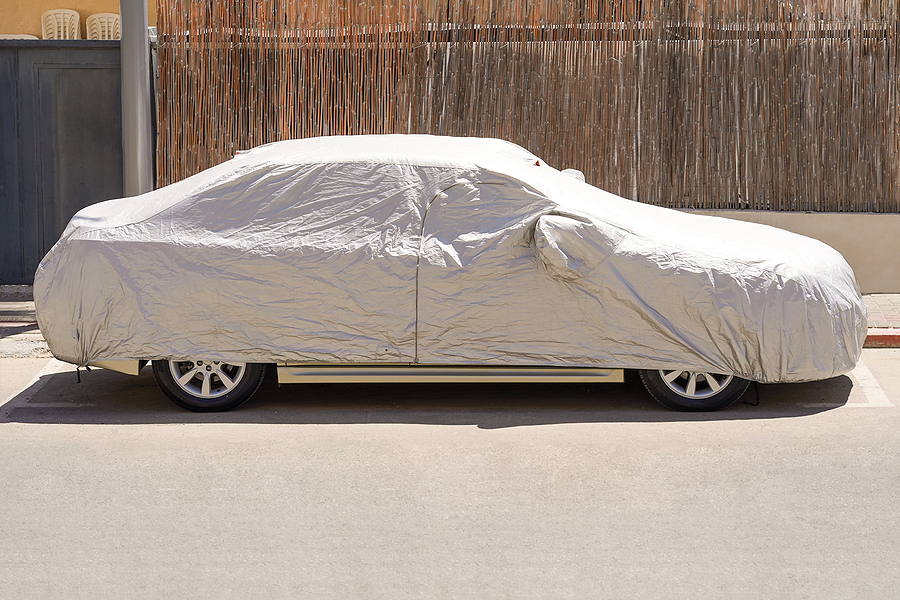
Cover your vehicle with a breathable car cover and seal all entry points to prevent weather damage and pest infestation. A garage provides ideal storage conditions, but not everyone has access to covered parking. Whether storing indoors or outdoors, a quality car cover protects your paint from UV damage, dust, and debris. Choose a cover sized for your specific vehicle—loose covers flap in the wind and can scratch paint through abrasion.
Before covering your vehicle, wash and wax it thoroughly. Bird droppings, tree sap, and road salt left on paint for months will cause permanent staining and corrosion. Clean the wheels and wheel wells to remove mud and grime.
Rodents view unoccupied vehicles as prime real estate. Mice and rats can chew through wiring harnesses, build nests in air filters, and leave droppings throughout your interior. The repairs can cost hundreds or thousands of dollars.
Seal these common entry points:
- Exhaust pipe (stuff with steel wool or a rag)
- Air intake openings
- Gaps around cables or steering column
- HVAC vents
Place dryer sheets, cotton balls soaked in peppermint oil, or mothballs around the vehicle’s perimeter—rodents dislike these scents. If storing in a garage, set traps and check them periodically.
Remove your windshield wiper blades or wrap them in plastic to prevent the rubber from sticking to the glass. Unscrew your antenna if using a car cover to avoid bending or breaking it.
FAQ
How long can a car sit without being driven?
Most vehicles can sit safely for up to four weeks without special preparation. Beyond 30 days, you should implement the storage procedures outlined above, including battery maintenance, fuel stabilization, and tire protection.
Should I start my car periodically during storage?
If possible, have someone start your car and drive it for 15 minutes every two weeks. Simply idling isn’t sufficient—the vehicle needs to reach operating temperature to properly lubricate components and charge the battery. If no one can drive it, use a battery tender instead.
What should I check before driving a stored vehicle?
Before starting your car after storage, inspect under the hood for rodent nests or chewed wires. Check all fluid levels. Verify tire pressure and inflate as needed. Remove any material covering the exhaust pipe or air intake. Check your brakes—surface rust on rotors is normal and should disappear after a few brake applications.
Do I need to maintain insurance on a stored vehicle?
Don’t cancel your insurance policy, as gaps in coverage often result in higher rates when you resume. Contact your insurer about comprehensive-only coverage, storage insurance, or policy suspension options that maintain continuous coverage at reduced cost.
How do I prepare an electric vehicle for storage?
Charge the high-voltage battery to 40-60% and enable storage mode if available. Use a Level 2 charger with scheduled charging to maintain the proper charge level. The 12-volt battery requires the same care as a gas vehicle—either disconnect it or use a battery tender.
Quick Recap: Your Storage Checklist
Before Storage:
- Wash and wax the vehicle thoroughly
- Fill the gas tank and add fuel stabilizer
- Change the oil if storing longer than 30 days
- Top off brake fluid and coolant
- Inflate tires to upper PSI range or use jack stands
- Disconnect battery or connect battery tender
- Remove or protect windshield wiper blades
- Seal exhaust pipe and air intake openings
- Place rodent deterrents around vehicle
- Apply weatherproof car cover
After Storage:
- Check for rodent damage and nests
- Verify all fluid levels
- Check and adjust tire pressure
- Test brakes for proper function
- Reconnect battery if disconnected
- Remove covers from exhaust and intake
- Wash vehicle to remove accumulated dust
Return to the Road with Confidence
Proper storage maintenance protects your vehicle from preventable damage and ensures it’s ready when you need it. From battery care to tire preservation, each step plays a vital role in maintaining your car’s health during extended periods of inactivity.
Need professional inspection after storage or preparing your vehicle for an upcoming absence? Our Indianapolis auto service team provides comprehensive maintenance with affordable rates and fast turnaround. Schedule your appointment today and drive away knowing your vehicle received expert care.
Related Post: Recommended Maintenance for a Car That Has Not Been Driven in a While