
That rhythmic clicking sound you hear when turning your steering wheel isn’t just an annoyance—it’s a warning signal from your vehicle’s drivetrain. While cars make many noises, a distinct click or pop during a turn is the classic hallmark of a failing Constant Velocity (CV) joint. Ignoring it can lead to more severe damage, potentially leaving you stranded with a broken axle.
Understanding what CV joints do and recognizing the early signs of failure can save you from costly repairs down the road. This guide covers everything you need to know about CV joint failure, from identifying symptoms to understanding repair costs.
Introduction to CV Joints
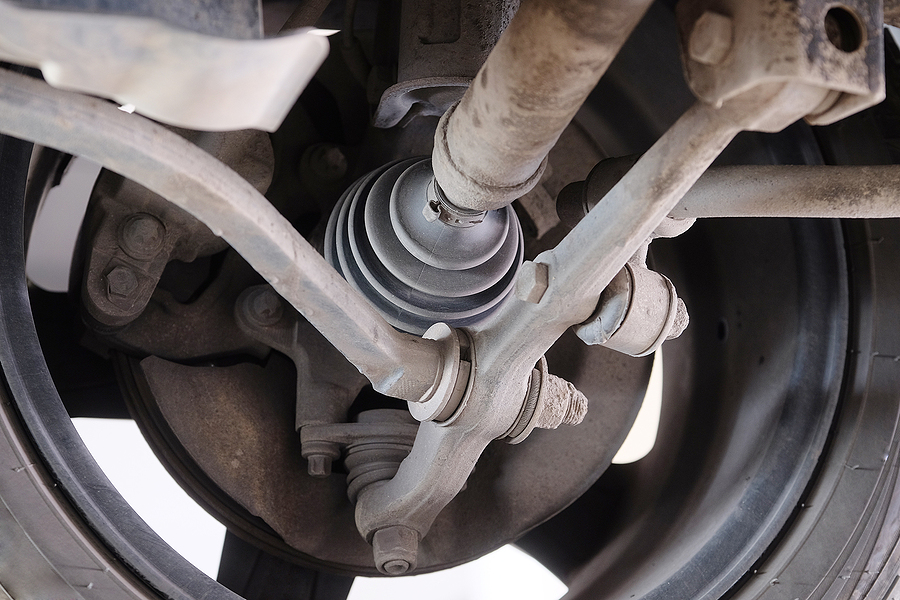
Your vehicle’s engine produces power, but it needs a way to transfer that power to the wheels so you can actually move. This is where the CV axle comes in. CV joints are critical components located at both ends of the drive axles. They transfer torque from the transmission to the drive wheels at a constant speed, while accommodating the up-and-down motion of the suspension.
There are two main types of CV joints on a typical axle:
- Inner CV Joint: Connects to the transmission.
- Outer CV Joint: Connects to the wheel.
These joints are packed with special grease and sealed inside a rubber or plastic boot. This boot keeps the grease in and contaminants—like dirt, water, and road salt—out. As long as this boot remains intact, CV joints are incredibly durable and can last for over 100,000 miles. However, once the protective boot is compromised, the clock starts ticking.
Symptoms of a Malfunctioning CV Joint
Because CV joints are tucked away under the car, you likely won’t see a problem before you hear or feel it. The symptoms often start subtly and worsen over time as the joint wears down or runs out of lubrication.
Clicking or Popping Noises When Turning
The most widely recognized symptom of a bad CV joint is a loud clicking, popping, or snapping noise when you turn the steering wheel. This sound is typically associated with a worn-out outer CV joint.
Here is why this happens: The outer joint has to articulate the most, handling the extreme angles of steering. When the joint becomes worn or damaged, the internal components (usually ball bearings in a cage) become loose. As you turn, these parts snap back and forth, creating that distinct audible click.
You will usually notice this sound becomes louder or faster as you accelerate through a turn. If the noise is on the right side when you turn left (loading the right wheel), or vice-versa, it helps pinpoint which axle is failing.
Other Common CV Joint Symptoms
While clicking is the most common sign, it isn’t the only one. A failing CV joint can manifest in several other ways:
- Grease on the Inside of the Tire: If the protective boot cracks or tears, centrifugal force will fling the grease outward as the axle spins. You might notice dark, thick grease splattered on the inside of your wheel rim or around the suspension components.
- Vibration While Driving: A worn or damaged CV joint can cause the axle to become unbalanced. This often results in a vibration that worsens as you accelerate. Unlike tire balance issues, which usually happen at specific speeds, CV joint vibrations can feel rhythmic and intensify under load.
- Clunking Noises: A worn inner CV joint is more likely to produce a clunking sound rather than clicking. You might hear this when shifting gears from drive to reverse, or when accelerating and decelerating rapidly.
Schedule Professional Automotive Service in Indy Today 📅
Causes of CV Joint Failure
CV joints are built to be tough, but they aren’t indestructible. Several factors can lead to their demise:
- Boot Failure: This is the most common cause. Rubber boots degrade over time due to heat, age, and exposure to the elements. Once the boot cracks or tears, grease escapes, and grit gets in. This friction destroys the metal joint quickly.
- Age and Wear: Even with a perfect boot, high-mileage vehicles can eventually experience natural wear on the metal components of the joint.
- Vehicle Modifications: Lifting a vehicle or altering the suspension geometry changes the angle at which the CV axle operates. Steeper angles increase stress on the joints, leading to premature failure.
- Impact Damage: Hitting a large pothole or debris can physically damage the axle shaft or the joint itself.
How to Inspect a CV Joint
If you suspect an issue, a visual inspection is a great first step. You don’t need to be a mechanic to check the condition of your CV boots.
- Park safely: Ensure the car is on level ground with the parking brake engaged.
- Locate the boots: Turn the steering wheel all the way to one side. Look behind the front wheel. You will see a corrugated rubber boot (looking somewhat like an accordion) behind the wheel hub.
- Check for damage: Use a flashlight to inspect the rubber. Look for cracks, tears, or splits in the folds.
- Look for grease: Check for thick, dark grease on the surrounding suspension parts or the boot itself.
- Test drive: Find an empty parking lot. Roll the windows down, turn the wheel all the way to the lock, and drive slowly in a circle. Listen for clicking. Repeat in the other direction.
When to Replace a CV Joint
If you find a torn boot but the joint is silent and drives smoothly, you might be able to get away with just replacing the boot and repacking the grease. However, this is labor-intensive and often messy.
If the joint is already clicking, popping, or vibrating, the damage is done. Replacing the boot at this stage won’t fix the metal wear inside. At this point, the entire CV axle assembly should be replaced. Driving on a failing CV joint carries risks; if the joint separates completely, power will no longer reach the wheels, leaving you stranded. In rare cases, a broken axle can flail around and damage other components like brake lines.
Cost of CV Joint Replacement
The cost to fix a CV joint issue varies significantly based on your vehicle’s make and model, and whether you go to a dealership or an independent auto repair shop. According to recent data from RepairPal and other automotive sources (as of late 2024/early 2025), replacing a CV axle typically falls into these ranges:
- Parts: A new axle shaft generally costs between $100 and $300 for standard vehicles, though luxury or heavy-duty parts can exceed $1,000.
- Labor: Professional labor usually costs between $150 and $300 per axle, depending on the shop’s hourly rate and the complexity of the suspension.
- Total: You can expect to pay anywhere from $300 to $1,300 for a complete replacement.
Repairing just the boot is cheaper in parts ($20-$50) but often costs nearly as much in labor because the axle usually has to be removed anyway. This is why most mechanics recommend replacing the full assembly.
Preventative Maintenance Tips
You can extend the life of your CV joints with simple vigilance:
- Regular Inspections: Ask your mechanic to inspect the CV boots during every oil change. Catching a small crack early can save the joint.
- Watch Your Driving: Avoid making sharp turns at high speeds or accelerating hard while the steering wheel is fully turned, as this puts maximum stress on the outer joints.
- Keep it Clean: If you drive off-road or in muddy conditions, wash the undercarriage to prevent grit from building up around the boots.
Take Action on Axle Noises
A clicking CV joint is a clear message from your car that maintenance is overdue. While it might be tempting to turn up the radio and ignore the noise, a broken axle is a safety hazard that isn’t worth the risk. Addressing the problem early ensures your vehicle remains safe and reliable for the miles ahead.
If you are hearing strange noises or suspect your CV joints are failing, don’t wait for a breakdown. For professional automotive diagnostics and repair in Indianapolis, Indiana, contact our trusted local mechanics today to get your vehicle back in top shape.
Related Post: 6 Strange Sounds and What They Possibly Mean for Your Vehicle